Blog · 12 min read
Hair Extensions Types Selection Guide for Women
June 2026
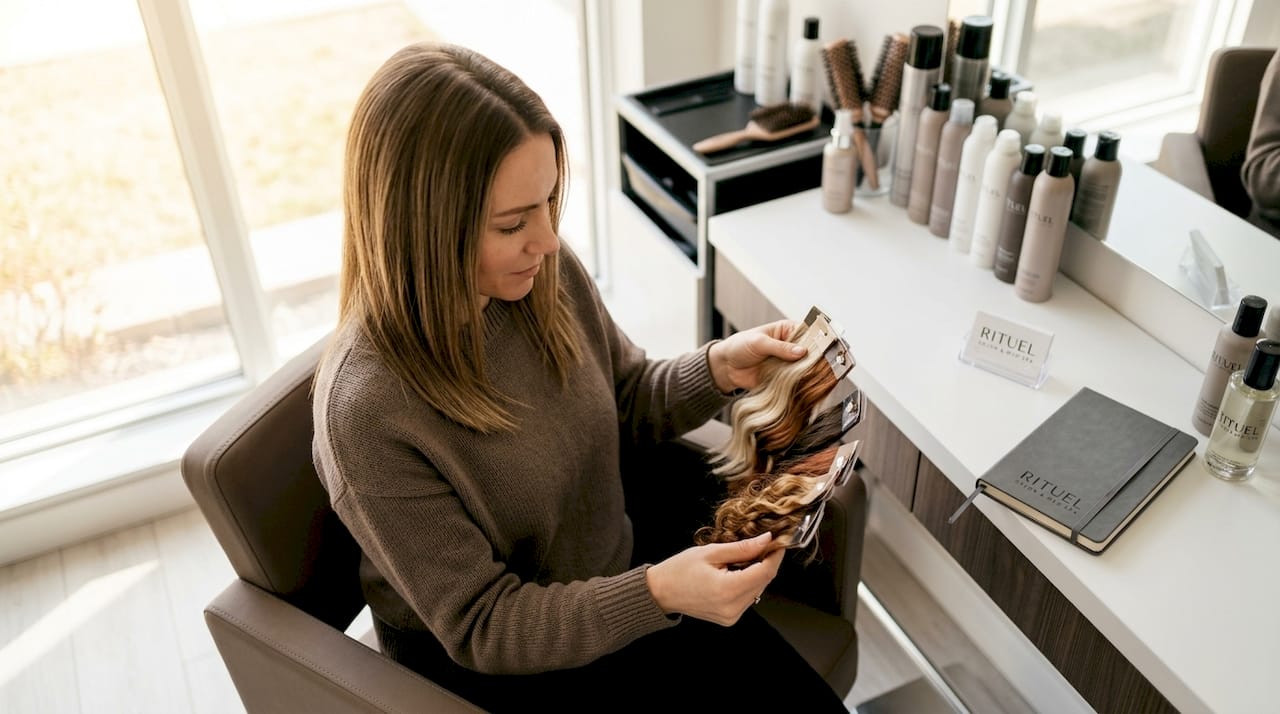
Hair Extensions Types Selection Guide for Women
Hair extensions are artificial or natural hair additions designed to instantly enhance your length, volume, or style, with each type offering distinct installation methods, wear time, and maintenance demands. This hair extensions types selection guide covers every major method available in 2026, from clip-ins and tape-ins to keratin bonds, sew-ins, micro-link rings, and halos. Choosing the right type depends on your hair texture, daily lifestyle, and how much maintenance you are willing to commit to. Human hair extensions are preferred over synthetic for natural movement, heat styling, and longer lifespan. Remy human hair and nano rings are two named benchmarks worth knowing before you start comparing options.
What are the main hair extension types explained?
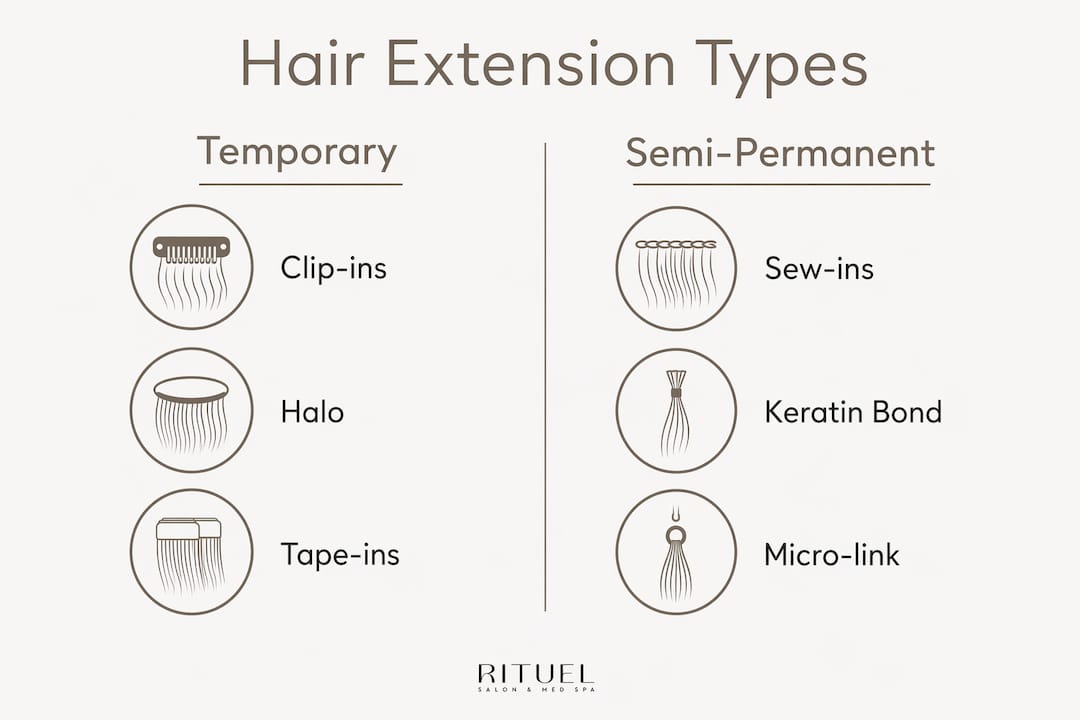
The six most common extension types are clip-ins, tape-ins, sew-ins or weaves, keratin bond or fusion, micro-link or nano ring, and halo extensions. Each method differs in how it attaches to your natural hair, how long it stays in place, and what kind of upkeep it requires. Understanding these differences is the foundation of any smart selection process.
Clip-in extensions are the most beginner-friendly option. You clip wefts directly onto your natural hair and remove them at the end of the day. Clip-ins are DIY-friendly and designed for quick removal and reapplication, making them ideal for anyone who wants flexibility without a salon commitment.
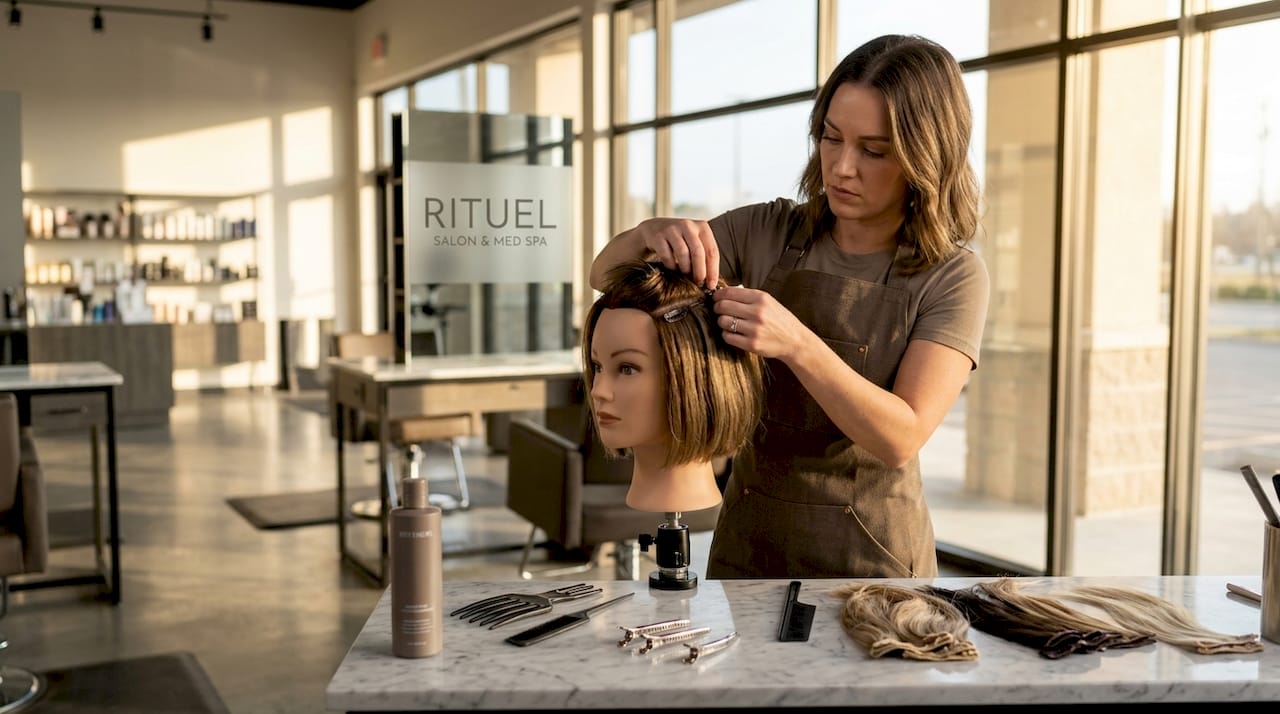
Tape-in extensions use adhesive strips to sandwich your natural hair between two wefts. They sit flat against the scalp and look very natural. Tape-ins require repositioning every 6 to 8 weeks as your natural hair grows and pushes the bond away from the scalp. With proper care, tape-ins last 6 to 12 months and can be reused multiple times, making them one of the most cost-effective semi-permanent options.
Sew-in or weave extensions involve braiding your natural hair into cornrows and sewing wefts onto those braids. This method is best suited for thicker, coarser hair that can support the tension. Sew-ins last 6 to 10 weeks before they need to be redone.
Keratin bond or fusion extensions are applied strand by strand using heat or a keratin adhesive. Keratin bond installs take 3 to 5 or more hours and last 3 to 5 months, but removal requires a professional using a special solution. This method delivers the most seamless, natural look of any permanent option.
Micro-link or nano ring extensions use tiny metal rings to attach individual hair strands without heat or adhesive. They are reusable and repositioned as your hair grows. Nano rings are particularly gentle and work well for medium-density hair.
Halo extensions sit on a thin wire that rests on top of your head, hidden under your natural hair. No clips, glue, or heat are involved. They are the least damaging option available and take under five minutes to apply.
| Method | Install Time | Wear Time | Maintenance | Relative Cost |
|---|---|---|---|---|
| Clip-in | Minutes | Daily removal | Low | Low |
| Tape-in | 1 to 2 hours | 6 to 8 weeks | Medium | Medium |
| Sew-in/weave | 2 to 4 hours | 6 to 10 weeks | Medium-high | Medium |
| Keratin bond | 3 to 5+ hours | 3 to 5 months | High | High |
| Micro-link/nano ring | 2 to 4 hours | 2 to 3 months | Medium | Medium-high |
| Halo | Under 5 min | Daily removal | Low | Low-medium |
Pro Tip: If you are new to extensions, start with clip-ins or a halo to test length and volume before committing to a semi-permanent method. This lets you find your ideal look without any risk to your natural hair.
How to choose hair extensions based on your hair type
The right extension depends on hair type, lifestyle, and daily wear preferences, including how easy removal needs to be and how much maintenance you can realistically handle. Matching your extension type to your hair’s natural texture and density is the single most important step in this process.
For fine or thinning hair:
- Clip-ins, halos, and tape-ins are the safest choices because they apply minimal traction to the scalp.
- Heavy or poorly placed extensions stress hair follicles, which is why low-traction options are recommended for fragile hair.
- Avoid sew-ins and heavy keratin bond sets, which can cause visible thinning over time.
- Use lighter weight wefts and fewer rows to keep the scalp comfortable.
For thick or coarse hair:
- Sew-ins and keratin bonds are well-suited because thick or coarse hair suits secure methods that can handle more tension and weight.
- Tape-ins also work well on thick hair when applied in enough rows to blend seamlessly.
- Avoid halos if your hair is very dense, as the wire can sit visibly on top of a thick crown.
For curly or coily hair:
- Texture matching is non-negotiable. Straight extensions on naturally curly hair will never blend convincingly.
- Look for curly or wavy Remy human hair extensions that match your curl pattern as closely as possible.
- Sew-ins are a popular choice in the natural hair community because they protect the natural hair underneath.
For wavy hair:
- Tape-ins and micro-link extensions blend well with wavy textures because they move naturally with the hair.
- Choose extensions with a slight wave or body rather than pin-straight wefts.
Pro Tip: Limit your length jump to 4 to 6 inches beyond your natural length for the most believable result. Going from a short bob to waist-length extensions in one appointment almost always looks unnatural, regardless of how well the color is matched.
Which extension method fits your lifestyle?
Your daily routine shapes your best extension choice just as much as your hair type does. A woman who works out five days a week has very different needs than someone who rarely sweats or gets their hair wet.
Here is a practical comparison to guide your decision:
- Daily flexibility needed: Clip-ins and halos are the clear answer. You put them in for events or workouts and remove them at night, with zero salon visits required for maintenance.
- Active lifestyle with workouts: Tape-ins hold up well during exercise because the flat adhesive bonds do not shift easily. Tape-in installs take just 1 to 2 hours versus 3 to 5 hours for keratin bonds, which matters when your schedule is tight.
- Low-maintenance preference: Keratin bonds and micro-links require the fewest salon visits once installed, since they last 3 to 5 months between appointments. The trade-off is a longer initial install and professional removal.
- Frequent color changes: Clip-ins win here. You can own multiple sets in different shades and swap them out without any chemical processing on your natural hair.
- Budget-conscious approach: Clip-ins have the lowest upfront cost and no salon fees. Tape-ins offer the best balance of longevity and reusability at a mid-range price point.
| Lifestyle Factor | Best Method | Why |
|---|---|---|
| High activity/workouts | Tape-in | Flat bond, stays secure during sweat |
| Minimal salon time | Keratin bond or micro-link | Long wear between appointments |
| Maximum flexibility | Clip-in or halo | Daily on and off, no commitment |
| Fine or fragile hair | Halo or tape-in | Low traction, gentle on scalp |
| Budget priority | Clip-in | No install cost, reusable indefinitely |
Pro Tip: Schedule your tape-in move-up appointments every 6 to 8 weeks without delay. Waiting longer causes the adhesive to slip and the bonds to tangle with your natural hair, which makes removal much harder and more damaging.
How to get natural-looking results with extensions
Natural-looking results come from matching texture, density, and placement more than from simply adding maximum length. This is the insight most first-time extension wearers miss, and it is the reason some extensions look obvious while others are completely undetectable.
Professional stylists under-serve length and over-serve placement to create a fuller, natural shape. Concentrating volume at the sides and around the face frame adds dimension without revealing attachment points at the crown or nape. Too much length or density at the top of the head is the fastest way to expose that you are wearing extensions.
Key practices for a seamless finish:
- Match your extension color to your ends, not your roots, since that is where the extensions will sit.
- Use balayage-colored extensions or have your extensions toned to match your current color before installation.
- Choose Remy human hair over synthetic for heat styling flexibility and a more natural texture over time.
- Keep extensions clean and conditioned with sulfate-free products to prevent tangling and dryness.
- Give your scalp recovery breaks between semi-permanent sets, especially if you have fine or thinning hair. Recovery breaks and low-tension options protect natural hair from traction damage over time.
Pro Tip: Ask your stylist to add a few face-framing pieces rather than a full set if you want a subtle upgrade. Two or three well-placed wefts near the front can transform your look without the weight or cost of a complete installation.
Key takeaways
Choosing the right extension type requires matching the method to your hair texture, lifestyle, and maintenance capacity, not just your desired length.
| Point | Details |
|---|---|
| Match method to hair type | Fine hair needs low-traction options like halos or tape-ins; thick hair suits sew-ins or keratin bonds. |
| Lifestyle drives the decision | Active women benefit from tape-ins; those wanting flexibility should choose clip-ins or halos. |
| Natural results need placement strategy | Concentrate volume at sides and face frame, not maximum length at the crown. |
| Maintenance timing matters | Tape-ins need move-ups every 6 to 8 weeks; keratin bonds last 3 to 5 months between appointments. |
| Human hair outperforms synthetic | Remy human hair offers better movement, heat styling, and a longer lifespan than synthetic alternatives. |
What I have learned after years of extension consultations
After working with hundreds of extension clients at Rituel Salon, the pattern I see most often is this: women choose the method they have heard the most about, not the one that actually fits their hair and life. Someone with fine, fragile hair books a full keratin bond set because a friend loved it, then wonders why her hair feels stressed six weeks later. Someone with thick, coarse hair tries clip-ins and gives up because they will not blend or stay put.
The consultation step is not optional. It is where you match the method to the reality of your hair, not to someone else’s Instagram result. I always ask three questions before recommending anything: How often do you wash your hair? How much time do you spend styling each morning? And are you willing to come back every 6 to 8 weeks for maintenance? Those three answers tell me almost everything I need to know.
The other mistake I see constantly is overloading. More rows, more wefts, more length does not equal a better result. It equals a look that reads as obviously artificial and puts unnecessary strain on your scalp. The best extension work I have ever done was subtle. Clients walked out looking like they had just grown the most beautiful hair of their lives, not like they were wearing a product.
Extensions are genuinely empowering when they are chosen wisely. They can restore confidence during a difficult hair growth phase, add volume where genetics have been unkind, and give you the length you have always wanted. But that outcome requires honesty about your hair, your schedule, and your commitment level. Get that right, and extensions will be one of the best beauty decisions you make.
— Victor
Find your perfect match at Rituel Salon
Rituel Salon & Med Spa in Phoenix specializes in hand-tied and tape-in extensions using premium Remy human hair, with every installation preceded by a personalized consultation. The team at Rituel assesses your hair texture, density, and lifestyle before recommending a method, so you never end up with extensions that work against your natural hair. Whether you are exploring tape-ins for the first time or ready to commit to a full keratin bond set, Rituel’s stylists guide you through every step, from color matching to maintenance scheduling. Visit the Rituel hair services page to explore options or book your consultation at 4700 N 12th St, Suite 211 in Phoenix’s central corridor.
FAQ
What are the least damaging hair extension types?
Halo extensions and clip-ins are the least damaging options because they use no heat, adhesive, or tension on the scalp. For semi-permanent wear, tape-ins applied correctly by a professional carry a lower damage risk than sew-ins or keratin bonds.
How often do tape-in extensions need maintenance?
Tape-in extensions require a move-up appointment every 6 to 8 weeks as your natural hair grows and pushes the bond away from the scalp. Skipping appointments causes slippage and tangling that can damage your natural hair during removal.
Can I use hair extensions on fine or thinning hair?
Yes, but the method matters. Fine or thinning hair is best suited to low-traction options like halos, clip-ins, or tape-ins. Heavy methods like sew-ins or dense keratin bond sets can stress hair follicles and worsen thinning over time.
What is the difference between Remy and synthetic hair extensions?
Remy human hair extensions have all cuticles aligned in the same direction, which prevents tangling and allows heat styling. Synthetic extensions are less durable, cannot be heat styled safely, and have a shorter lifespan despite a lower upfront cost.
How do I choose between clip-ins and tape-ins?
Clip-ins are the right choice if you want daily flexibility and zero salon commitment. Tape-ins suit women who want a continuous, natural look for several weeks at a time and are willing to schedule regular maintenance appointments every 6 to 8 weeks.