Blog · 12 min read
How the Balayage Technique Works: A Full Guide
June 2026
How the Balayage Technique Works: A Full Guide
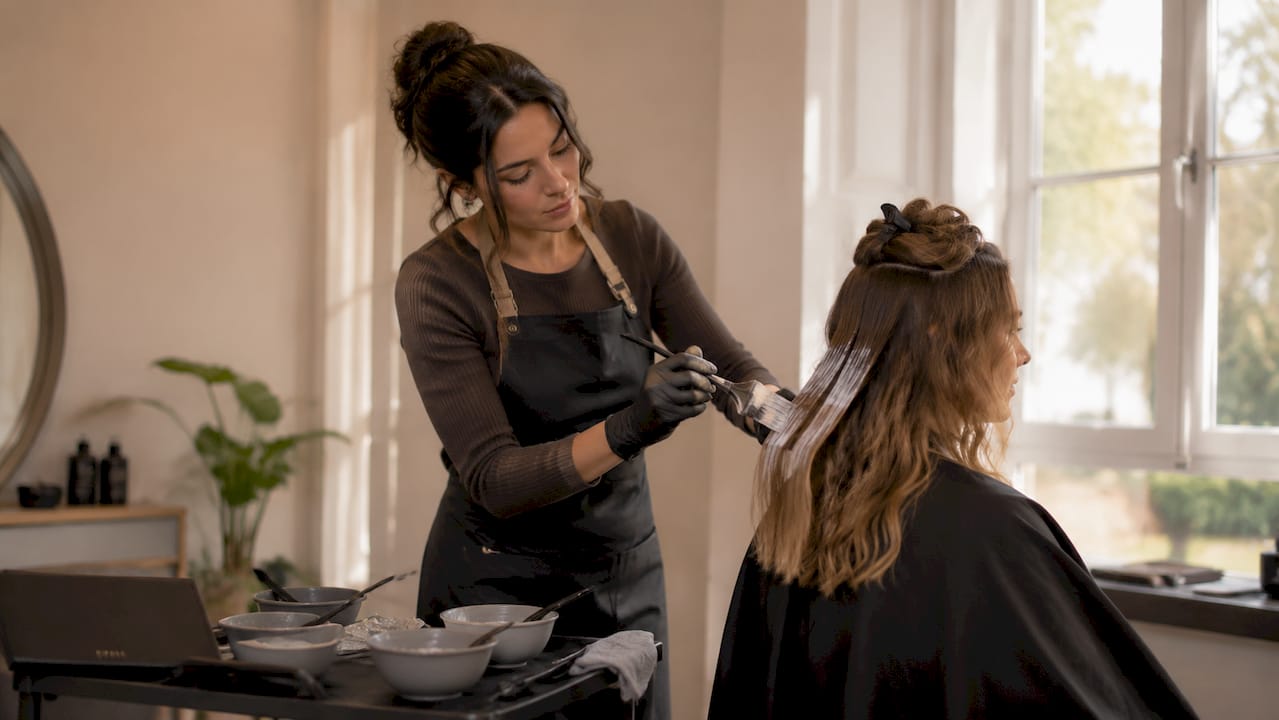
Balayage is defined as a freehand hair coloring technique where a stylist sweeps lightener directly onto selected hair sections to create a gradual, sun-kissed gradient from darker roots to lighter ends. The word itself comes from the French verb balayer, meaning “to sweep,” which describes the brush motion precisely. Unlike traditional foil highlights, balayage requires no foils during the standard application, relying instead on controlled hand-painting to build dimension. The result is a natural-looking color that grows out gracefully, making it one of the most requested techniques at color-focused salons like Rituel Salon & Med Spa in Phoenix, Arizona.
How does the balayage technique work step by step?
The balayage technique application begins with sectioning the hair into four quadrants, then breaking each quadrant into thin subsections roughly a quarter-inch wide. Precise sectioning prevents uniform stripes and creates the seamless, dimensional look balayage is known for. Alternating the starting points of each painted section adds further irregularity, which is exactly what makes the color read as natural rather than processed.
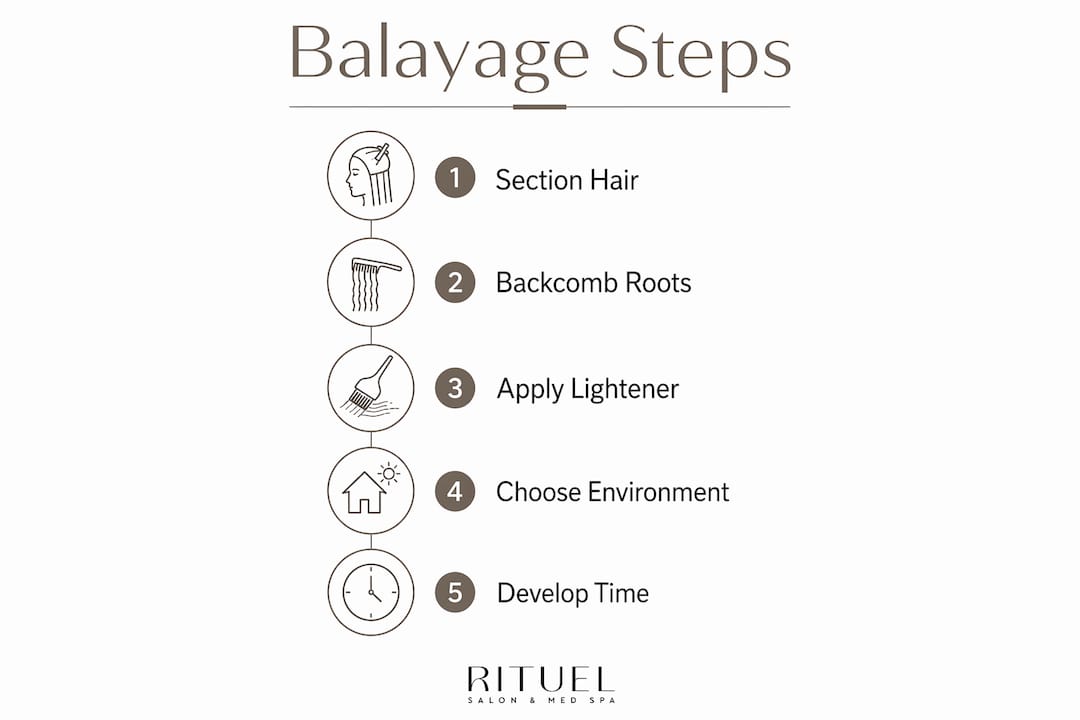
Once a subsection is isolated, the stylist applies lightener starting at the mid-shaft and working toward the ends, deliberately leaving the roots untouched. Less product sits higher on the strand, with saturation increasing toward the tips. This graduated application is what produces the soft root-to-end transition that defines the technique. The stylist uses sweeping brush strokes rather than saturating the hair evenly, so the color intensity builds naturally.
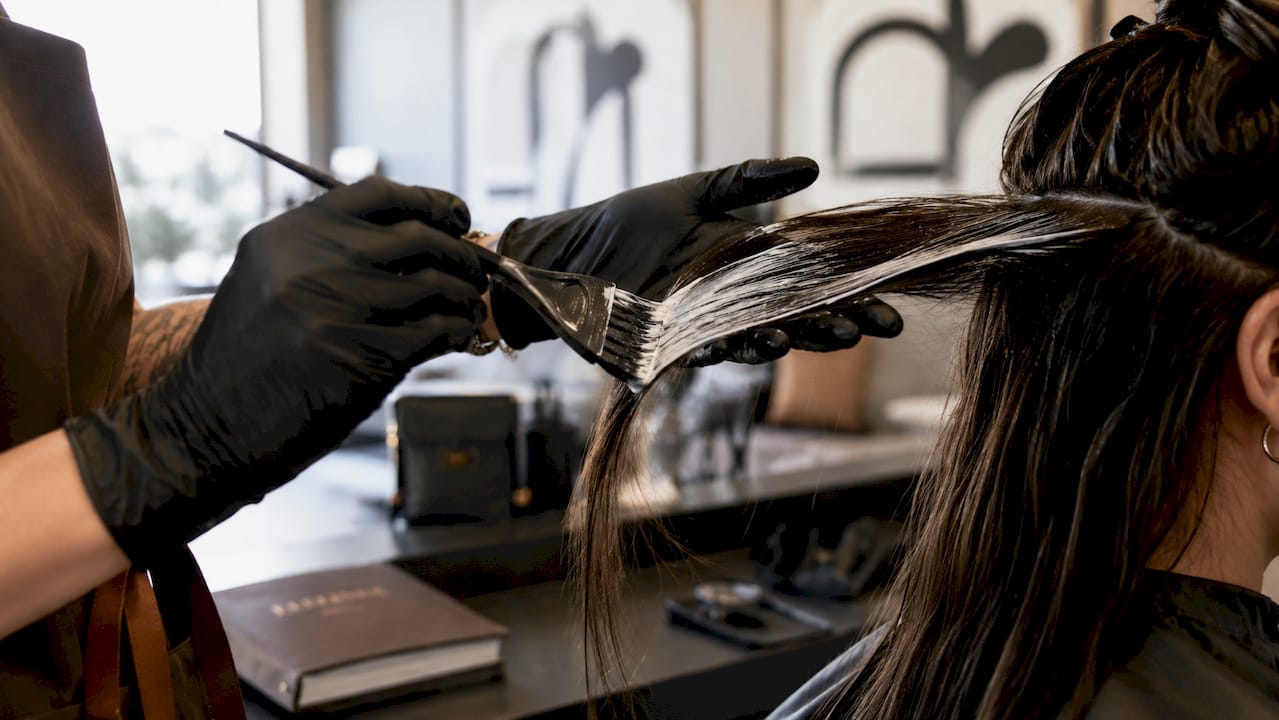
Before painting, many colorists lightly backcomb or tease the section at the root area. Teasing before painting creates a feathered boundary that prevents a harsh line where the lightener begins. This step is subtle but critical. Without it, even a well-painted application can look blocky once the hair is dry.
The two main application environments are open-air and foil-assisted. Open-air balayage relies on feathering product upward to allow natural blending during development. Foil-assisted balayage, often called foilayage, wraps painted sections in foil to trap heat and push lift further. Each method produces a different result, and the choice depends on the client’s natural hair color and target shade.
Development time for a professional balayage session typically runs 20 to 45 minutes depending on hair texture, starting color, and the desired level of lift. At-home kits from brands like Prose follow a similar window, with development around 20 to 30 minutes for most hair types. L’Oréal Paris guidance frames at-home development at 25 to 45 minutes based on natural color depth. Monitoring the hair throughout development is non-negotiable because over-processing creates uneven brassiness rather than a clean lift.
Pro Tip: Set a timer at the 20-minute mark and check a test strand before committing to the full development window. Hair that lifts faster than expected is far easier to manage when caught early.
What are the differences between balayage, traditional highlights, and foilayage?
Balayage and traditional highlights are both lightening techniques, but they produce noticeably different results and require different maintenance schedules. Understanding the distinctions helps you decide which method fits your hair goals and lifestyle.
Traditional foil highlights involve placing lightener on sections from root to tip, then wrapping each section in foil to isolate it and accelerate processing with trapped heat. The result is a more uniform, structured look with consistent color from root to end. Clean, consistent sectioning in traditional highlights creates a more defined grow-out line, which becomes visible as early as six to eight weeks after the appointment.
Balayage, by contrast, leaves the roots darker and concentrates color in the mid-lengths and ends. The softer transition means regrowth blends naturally into the painted sections. Clients can wait three to six months between balayage appointments versus six to eight weeks for traditional highlights. That difference in maintenance frequency is one of the primary reasons clients choose balayage over a standard foil service.
Foilayage sits between the two. It uses the hand-painted placement of balayage combined with foils to trap heat and increase lift, making it the preferred choice for clients with darker base colors who want brighter results without the structured look of traditional highlights.
| Feature | Balayage | Traditional highlights | Foilayage |
|---|---|---|---|
| Application method | Freehand, no foils | Foils, root to tip | Hand-painted, then foiled |
| Root appearance | Naturally darker | Uniform from root | Soft root, higher lift |
| Grow-out visibility | Minimal | Noticeable at 6-8 weeks | Moderate |
| Maintenance frequency | Every 3-6 months | Every 6-8 weeks | Every 8-12 weeks |
| Best for | Natural, sun-kissed look | Defined, bright color | Dark hair needing lift |
Key differences at a glance:
- Balayage creates dimension without a defined part line, making it more forgiving as hair grows.
- Traditional highlights deliver more uniform brightness and are better suited for clients who want consistent color throughout.
- Foilayage gives the softness of balayage with the lifting power of foils, ideal for brunettes targeting a lighter result.
What are the common variations and advanced balayage techniques?
The core freehand method has expanded into several specialized approaches, each designed to address a specific hair goal or starting point.
- Babylights: Ultra-fine sections are painted with a delicate hand to mimic the subtle highlights children naturally develop in the sun. The result is soft, multidimensional color with no single strand standing out. Babylights work particularly well on fine hair where heavy sections would look chunky.
- Color melting: Multiple shades are blended seamlessly from root to end, often combining a darker root tone, a midtone, and a lighter end shade. The technique eliminates any visible transition line between colors. Color melting is the go-to approach when a client wants a rich, dimensional result without any stark contrast.
- Reverse balayage: Instead of lightening the ends, the stylist adds depth at the roots and mid-lengths to create richness and shadow. This technique suits clients who have over-lightened hair and want to restore a more natural base without a full color correction service.
- Foilayage (advanced application): Beyond its role as a highlight alternative, foilayage is specifically valuable for clients with dark or previously dyed hair where open-air balayage alone cannot achieve sufficient lift. The foil environment raises the temperature around the lightener, accelerating the chemical reaction and producing a brighter result.
Pro Tip: If you have dark brown or black hair and want a noticeable lightening effect, ask your colorist specifically about foilayage rather than standard balayage. The open-air method alone may not lift enough in a single session, and attempting to compensate with stronger developer increases the risk of damage.
The key to a flawless result across all these variations is controlled placement with gradual saturation. Each technique adjusts where and how heavily the product is applied, but the foundational principle of building color intensity from root to end remains constant.
How to get the best balayage results at a salon or at home
Whether you are booking a professional appointment or attempting a DIY application, the same core principles determine whether the result looks natural or patchy.
At the salon:
- Consult your colorist about your natural base level and any previous color treatments before the appointment. Darker or chemically treated hair requires adjusted developer strength and longer monitoring, and your colorist needs that information upfront.
- Ask to see a placement plan before the lightener goes on. A skilled colorist will show you where they intend to paint and why, based on your face shape, part placement, and hair density.
- Request a toner after lightening. Toning neutralizes unwanted brassiness and deposits a chosen shade to refine the final color. Skipping this step often leaves the hair looking yellow or orange rather than the warm blonde or cool ash the client expected.
- Follow up with a bond-building treatment like Olaplex No. 3 or a similar at-home reconstructor in the weeks after your appointment to maintain the integrity of lightened strands.
At home:
- Choose a kit with a developer volume matched to your starting color. A 20-volume developer lifts one to two levels and suits darker blondes or light browns. A 30-volume developer lifts two to three levels and is appropriate for medium brown hair.
- Section your hair into four quadrants before opening the lightener. Skipping this step leads to missed sections and uneven results.
- Apply lightener from mid-shaft to ends on thin subsections, using a brush rather than your fingers for more controlled placement.
- Set a timer and check the hair every ten minutes. Total development typically runs 25 to 45 minutes depending on your natural color depth.
- Rinse thoroughly, apply a deep conditioner, and follow with a purple or blue toning shampoo to manage brassiness between sessions.
For a deeper look at the freehand application process, the balayage freehand technique overview from Rituel Salon & Med Spa breaks down the brush mechanics in detail.
Key takeaways
Balayage works because freehand placement concentrates lightener at the mid-shaft and ends, creating a natural gradient that requires far less maintenance than traditional foil highlights.
| Point | Details |
|---|---|
| Freehand application | Lightener is swept from mid-shaft to ends, leaving roots darker for a natural gradient. |
| Lower maintenance | Clients typically wait 3-6 months between appointments versus 6-8 weeks for foil highlights. |
| Foilayage for dark hair | Adding foils to hand-painted sections increases lift, making it the better choice for brunettes. |
| Sectioning is critical | Thin, alternating subsections prevent uniform stripes and produce seamless dimension. |
| Toning completes the look | A toner applied after lightening neutralizes brassiness and refines the final color result. |
Why balayage has staying power, from someone who sees it every day
I have watched balayage go from a niche French technique to the most requested color service in the salon, and the reason is straightforward. It solves the problem most clients actually have, which is wanting color that looks good between appointments without requiring a standing six-week booking.
What I find most interesting is how often clients come in expecting balayage to be a single, fixed look. It is not. The technique is a delivery method, not a finished style. Where the colorist places the lightener, how heavily they saturate each section, and which toner they choose afterward determines whether the result reads as a subtle sun-kissed glow or a dramatic contrast. Two clients can receive balayage on the same day and walk out looking completely different.
The cases where I recommend traditional highlights instead are specific. Clients who want very uniform, consistent brightness from root to end, or those who need precise color placement around a defined part, often get a cleaner result from foil work. Balayage rewards movement and texture. It looks best on hair that is worn down and slightly tousled, not on a sleek, straight blowout where every strand is visible.
Modern hybrids like foilayage have genuinely expanded what is possible for darker-haired clients. Before foilayage became standard practice, a client with dark brown hair who wanted a warm honey blonde result would need multiple sessions or risk significant damage. Now that combination approach handles it in one appointment with far more predictable results. If you are unsure which method fits your hair, a 15-minute consultation with a colorist who specializes in color work is worth more than any amount of research done alone.
— Victor
See what professional balayage looks like in person
If you have been researching the technique and are ready to see what it can do for your specific hair, Rituel Salon & Med Spa in Phoenix offers expert balayage and color services tailored to your natural base, texture, and lifestyle.
The color team at Rituel Salon & Med Spa works with every base color, from light blonde to deep black, using both open-air and foilayage methods to match the technique to the result you actually want. You can explore the full range of professional balayage services and book a consultation directly online. For clients interested in a complete hair transformation, the full hair color menu covers highlights, color correction, and toning services alongside balayage. Browse professional hair care products to maintain your color between appointments.
FAQ
What does balayage mean?
Balayage is a French word meaning “to sweep,” which describes the hand-painting motion used to apply lightener directly onto hair sections without foils.
How long does balayage take to develop?
Development time runs approximately 20 to 45 minutes depending on your natural hair color and the level of lift you want, with darker hair typically requiring the longer end of that range.
Is balayage better than highlights for low maintenance?
Balayage is lower maintenance than traditional foil highlights because the softer root transition means regrowth blends naturally, allowing clients to wait three to six months between appointments instead of six to eight weeks.
Can balayage work on dark hair?
Yes, though dark or previously color-treated hair often requires foilayage rather than open-air balayage to achieve sufficient lift. A colorist will assess your base level and recommend the appropriate developer strength and technique.
How is foilayage different from balayage?
Foilayage combines the freehand placement of balayage with foils that trap heat around each painted section, producing more lift and brightness than open-air balayage alone while retaining the soft, blended root characteristic of the technique.