Blog · 11 min read
What Is a Beauty and Wellness Destination?
June 2026

What Is a Beauty and Wellness Destination?
If you’ve ever booked a spa day and wondered why it felt like something was missing, you’ve already sensed the gap between a single treatment and a true beauty and wellness destination. These places are more than a massage table and a cucumber water. They are integrated ecosystems where treatments, community programming, environment, and accessibility work together to deliver lasting results. Understanding what actually qualifies a place as a wellness destination, the industry term used by organizations like the Wellness Tourism Association, helps you make smarter choices about where you invest your time and money.
Table of Contents
- Key takeaways
- What is a beauty and wellness destination, really?
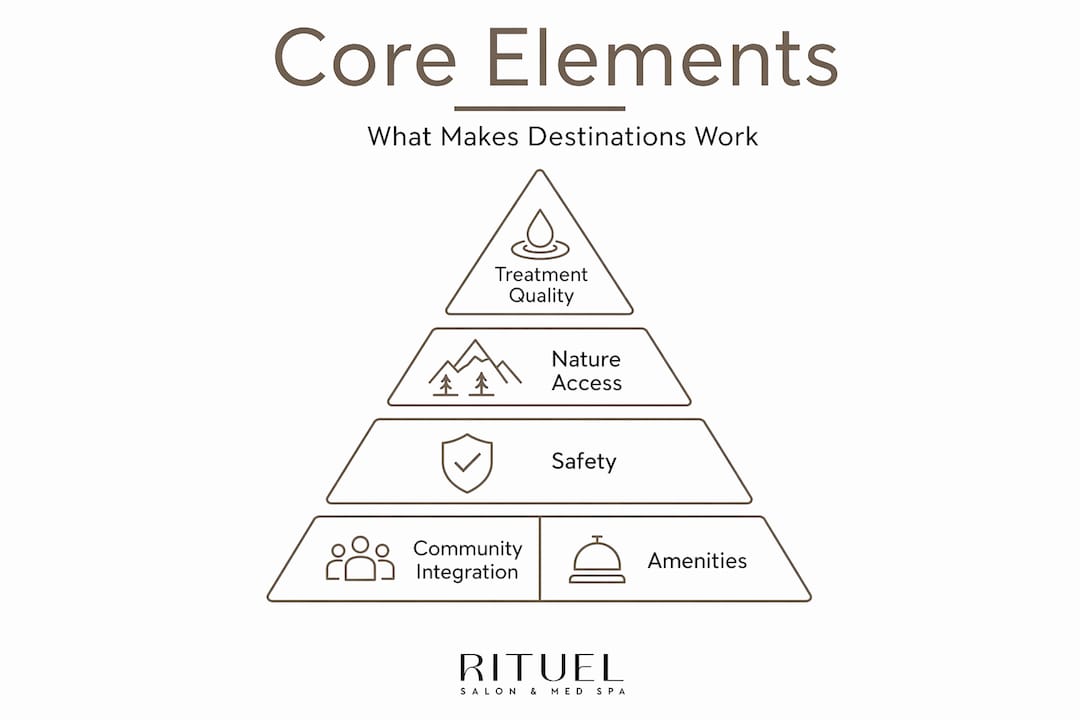
- Core elements that make these destinations work
- How destinations organize their offerings in practice
- How luxury and holistic trends are reshaping these destinations
- My take on what actually matters when choosing
- Experience destination-level wellness in Phoenix
- FAQ
Key takeaways
| Point | Details |
|---|---|
| More than a spa | A beauty and wellness destination is a community-integrated ecosystem, not just a single facility. |
| Industry criteria exist | The Wellness Tourism Association sets 10-point criteria to help consumers identify authentic destinations. |
| Practical logistics matter | Natural environment, safety, hygiene, and transport access rank as high as treatment quality for visitor satisfaction. |
| Luxury has evolved | Modern high-end destinations offer sleep science, metabolic programs, and ancient healing alongside traditional spa services. |
| Local options count | You do not need to travel internationally to access a destination-level beauty and wellness experience. |
What is a beauty and wellness destination, really?
Most people picture a resort with a hot tub when they hear the phrase “wellness destination.” That image undersells the concept significantly. According to the Wellness Tourism Association, a wellness destination is a geographic area that integrates wellness into community life and the regional economy, not simply a collection of spas operating in the same zip code.
That distinction matters. A single luxury spa, no matter how well-appointed, does not constitute a destination on its own. The WTA’s 2025 definition requires that the surrounding community, service providers, and local infrastructure all contribute to a wellness-oriented experience. Think of it as the difference between a great restaurant and a food city. One excels in isolation; the other creates an entire culture around the experience.
To bring more structure to the concept, the WTA published a 10-point criteria framework that destinations must meet to legitimately market themselves as wellness destinations. These criteria include:
- Sustainability practices embedded in destination operations
- Accessible wellness professionals and licensed practitioners
- Healthful cuisine options across the destination
- Fitness and movement programming available to visitors
- Quiet, restorative natural environments
- Safety and hygiene standards that meet or exceed regional norms
- Transportation access that does not create barriers to participation
- Community habits that reflect and reinforce wellness values
- A range of beauty and therapeutic service providers
- Marketing that accurately represents what the destination offers
Pro Tip: When researching a potential wellness destination, ask whether the surrounding neighborhood, local restaurants, and community culture support wellness. If the answer is no, you are looking at a wellness facility, not a wellness destination.
The criteria exist specifically to protect consumers. The WTA on responsible marketing is clear that destinations using the label without meeting these standards create confusion and erode trust across the entire industry.
Core elements that make these destinations work
Knowing the definition is one thing. Understanding what actually drives satisfaction for visitors is another. A 2025 study published in MDPI using the 6AsTD framework identified the top priorities wellness tourists weigh when evaluating destinations.
The three most influential factors were Attractions, Accessibility, and Amenities. Here is what each looks like in practice:
- Attractions include natural scenery, cultural experiences, healing traditions, and signature treatments that give a destination its identity. A thermal spring region in Iceland and a K-beauty district in Seoul both qualify because they offer something visitors cannot replicate at home.
- Accessibility covers how easy it is to reach the destination, move around once you are there, and access services without logistical friction. Poor transportation infrastructure can undermine even the most impressive treatment menu.
- Amenities refer to the supporting infrastructure: healthy dining, clean accommodations, fitness facilities, and wellness retail that extend the experience beyond a single appointment.
The same MDPI research found that natural environment and safety rank nearly as high as treatment quality in visitor satisfaction scores. This is a finding that surprises most people. You might choose a destination for its facials, but your overall experience will be shaped by whether you felt safe, whether the air quality was good, and whether you could find a nourishing meal afterward.
| Element | Why it matters | Example |
|---|---|---|
| Natural environment | Reduces cortisol and supports recovery | Forest bathing regions in Japan |
| Safety and hygiene | Builds trust and removes anxiety | Licensed med spa districts with regulatory oversight |
| Healthful cuisine | Extends wellness benefits beyond treatments | Farm-to-table resort dining programs |
| Fitness programming | Reinforces physical wellness between appointments | Morning yoga, guided hikes, aquatic therapy |

How destinations organize their offerings in practice
Understanding the theory is useful, but seeing how real destinations apply these concepts makes it tangible. Seoul offers one of the clearest examples. In 2025, the Seoul Metropolitan Government published a curated list of its top 100 beauty and wellness spots, organized into three categories: Rest, Refresh, and Rejuvenate.
This classification reflects the multidimensional nature of modern wellness tourism. The list included traditional Korean medicine clinics, K-beauty salons, healthy food markets, cultural arts spaces, and healing retreats. No single category dominated. The city recognized that different visitors arrive with different needs, and a destination that only serves one type of experience limits its own reach.
| Seoul category | What it includes | Who it serves |
|---|---|---|
| Rest | Healing spaces, meditation centers, quiet retreats | Visitors seeking recovery and stress reduction |
| Refresh | Healthy cuisine, active wellness, cultural experiences | Visitors focused on energy and renewal |
| Rejuvenate | K-beauty treatments, traditional medicine, spa services | Visitors prioritizing appearance and physical restoration |
What Seoul’s model shows is that the best wellness retreats do not try to be everything to everyone in a single venue. Instead, they build a network of specialized providers that collectively cover the full spectrum of wellness needs. This is exactly what the WTA means when it talks about community and ecosystem as the foundation of a legitimate wellness destination.
How luxury and holistic trends are reshaping these destinations
The definition of luxury within beauty and wellness travel has shifted considerably over the past decade. Where a five-star spa once meant marble finishes and a long treatment menu, today’s top beauty resorts compete on depth of programming and measurable outcomes.
High-end destinations now regularly offer:
- Sleep science programs that include sleep environment optimization, circadian rhythm coaching, and recovery tracking
- Metabolic balance centers where guests receive personalized nutrition and hormone assessments before any treatment begins
- Ancient healing philosophies like Ayurveda, Traditional Chinese Medicine, and Indigenous plant medicine, integrated alongside clinical services
- Recovery-focused amenities such as infrared saunas, cryotherapy, and compression therapy that address physical performance as much as relaxation
According to reporting on global wellness trends, properties like Four Seasons and Royal Mansour have moved toward comprehensive wellness focused on recovery metrics, not just guest satisfaction scores. Guests receive health evaluations on arrival and leave with personalized protocols to continue at home.
This shift reflects a broader change in what wellness tourists want. The benefits of wellness travel are no longer just about feeling good for a week. Visitors increasingly expect results they can sustain, which means destinations must deliver programming that addresses sleep, nutrition, movement, mental health, and beauty in an integrated way.
Pro Tip: When evaluating a luxury wellness destination, ask whether they offer a pre-arrival health intake or post-visit follow-up protocol. Destinations that treat your visit as a one-time transaction are selling relaxation. Destinations that treat it as part of an ongoing wellness arc are delivering something closer to genuine transformation.
The rise of sustainable beauty practices within wellness destinations also reflects this shift. Eco-conscious travelers are choosing providers that align their environmental values with their personal care choices, and destinations that ignore this are losing ground with the fastest-growing segment of wellness tourists.
My take on what actually matters when choosing
I’ve seen a lot of people make the same mistake when planning a self-care getaway. They focus almost entirely on the treatment menu and almost nothing on the surrounding context. They book a facial at a resort because the photos look beautiful, then arrive to find that getting there required a stressful two-hour transfer, the food options were limited, and the “wellness” branding was mostly aesthetic.
What I’ve learned is that the practical logistics shape your experience more than any single treatment. If you cannot get there without exhausting yourself, the recovery begins before you even check in. If the environment does not support rest, the best massage in the world will not fully land.
I also think most travelers underestimate the value of community integration. A destination where the local culture genuinely reflects wellness, where the markets sell fresh produce, where the streets are walkable and calm, delivers something that a self-contained resort cannot replicate. The destination itself becomes part of the therapy.
Sustainability matters more than most people admit, too. Destinations that use sustainable skin care approaches and environmentally responsible practices are telling you something about their values. They are more likely to invest in the quality of their treatments and the integrity of their programming because they are thinking long-term, not just about the next booking.
My honest advice: use the WTA criteria as a checklist before you commit. If a destination cannot clearly demonstrate how it meets those 10 points, it is probably selling you an atmosphere, not a wellness experience.
— Victor
Experience destination-level wellness in Phoenix
You do not need a passport to access the kind of beauty and wellness experience this article describes. Rituel Salon & Med Spa in Phoenix, Arizona, brings together the core elements of a true wellness destination under one roof: clinical expertise, personalized programming, and a full spectrum of services that address beauty and health together.
From HydraFacial and DiamondGlow facials to Botox, microneedling, and chemical peels, the med spa side covers skin health with the kind of results-driven approach you would expect from a top-tier destination. The IV therapy program includes NAD+, vitamin drips, and B12 shots that support energy, recovery, and overall vitality. On the salon side, precision cuts, balayage, color, and extensions round out a truly comprehensive med spa service menu that reflects modern wellness values. Weight loss programs using Semaglutide and Tirzepatide, hormone replacement therapy, and peptide therapy extend the offering into long-term health support. Book a consultation at Rituel Salon & Med Spa and experience what destination-level care looks like close to home.
FAQ
What officially qualifies a place as a wellness destination?
The Wellness Tourism Association defines a wellness destination as a geographic area that integrates wellness into community life and the regional economy, meeting a 10-point criteria framework that includes sustainability, professional accessibility, healthful cuisine, and natural environment quality.
How is a wellness destination different from a spa?
A spa is a single facility offering treatments, while a wellness destination is an ecosystem where the surrounding community, infrastructure, and programming collectively support a wellness-oriented experience for visitors.
What do wellness tourists prioritize most when choosing a destination?
Research using the 6AsTD framework found that Attractions, Accessibility, and Amenities are the top priorities, with natural environment, safety, and hygiene ranking nearly as high as the quality of treatments themselves.
Are luxury wellness destinations only for international travel?
No. Many cities now offer destination-level wellness experiences locally, with med spas, holistic centers, and integrated wellness providers that meet the same standards as internationally recognized beauty vacation spots.
What is the difference between wellness tourism and a spa vacation?
Wellness tourism, as defined by the Wellness Tourism Association, involves travel where the primary motivation is improving or maintaining physical, mental, or spiritual health through a destination’s integrated programming. A spa vacation centers on relaxation at a single venue without that broader community or lifestyle integration.