Blog · 11 min read
What Is Hair Glossing Treatment? Your Shine Guide
June 2026
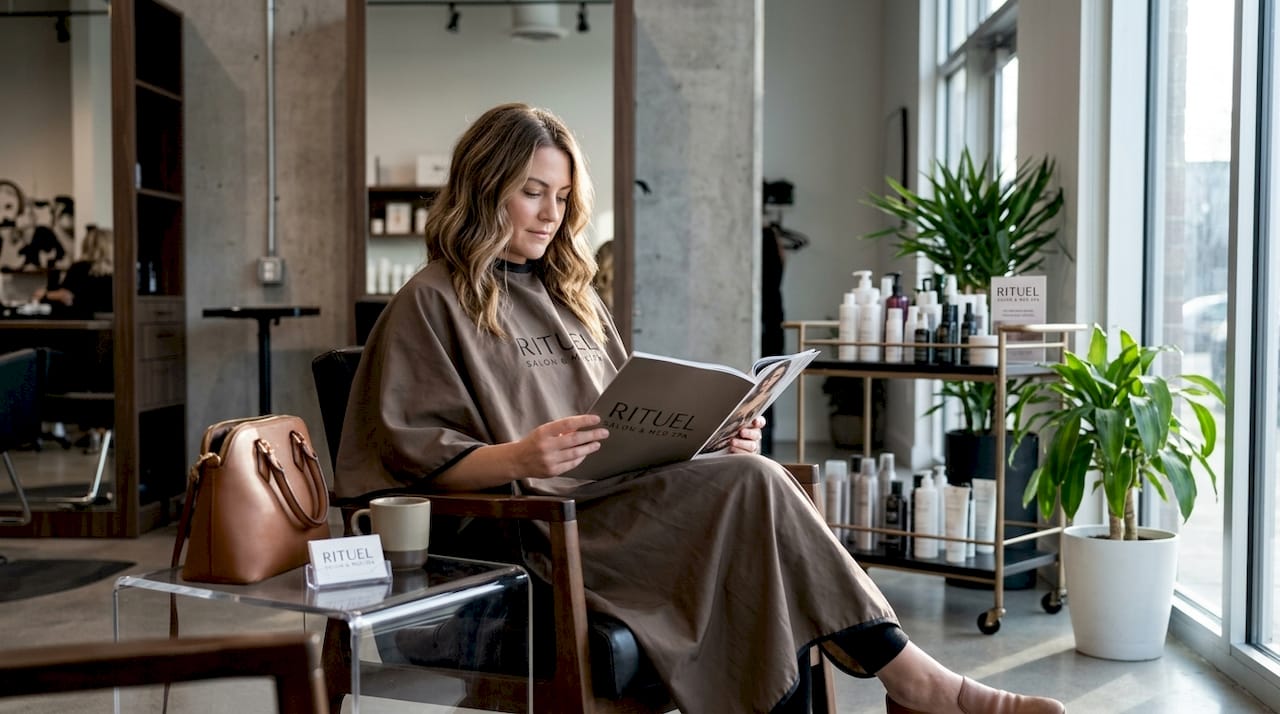
What Is Hair Glossing Treatment? Your Shine Guide
Hair glossing treatment is one of the most misunderstood services in the salon world. Most people assume it’s another word for a dye job or a deep conditioning mask. It’s neither. A hair gloss, known professionally as a glaze or demi-permanent toner, sits in its own category: part shine treatment, part tone corrector, and part hair health booster. If your hair looks dull, slightly brassy, or just lacks that fresh-from-the-salon finish, a gloss may be exactly what it needs. This guide breaks down how it works, what types exist, and how to get the most out of it.
Table of Contents
- Key takeaways
- What hair glossing treatment is and how it works
- Types of hair glossing treatments
- Hair gloss benefits beyond shine
- How to apply and maintain your gloss results
- My honest take on hair glossing
- Glossy, radiant hair is waiting for you at Rituel
- FAQ
Key takeaways
| Point | Details |
|---|---|
| Gloss is not hair dye | It refines tone and adds shine without lifting or permanently changing your color. |
| Two main formats exist | Clear glosses boost shine only; tinted glosses correct tone issues like brassiness. |
| Salon glosses last longer | Demi-permanent salon glosses penetrate the cuticle slightly, while at-home versions coat the surface and fade faster. |
| Benefits go beyond shine | Glosses often contain conditioning agents that smooth the cuticle and improve overall hair softness. |
| Customization matters | Hair porosity and base color affect results, making professional application the most reliable option. |
What hair glossing treatment is and how it works
A hair glossing treatment, or gloss, is a semi-permanent or demi-permanent formula designed to improve softness and shine while fine-tuning your existing color tone. It does not lift the hair or change your natural color dramatically. Think of it the way Wella Professional describes it: a “top coat” for your hair, smoothing the cuticle and adding a reflective finish the same way a top coat seals and brightens a manicure.
Here is how the science behind it works in practical terms. Your hair cuticle, the outermost layer of each strand, is made up of overlapping scales. When those scales are rough, lifted, or damaged, light scatters instead of reflecting. The result is dull, flat hair. A gloss formula seals those scales down, creating a smoother surface that bounces light more evenly.
Hairstylist Anthony Rawlings describes the treatment as a reflective top coat that is gentler than traditional dye, specifically used for shine and tone refinement rather than dramatic color change. That distinction matters because it sets the right expectations before you book a service or pick up a product.
There are two broad categories to know:
- Clear glosses: These add shine and softness without any tonal shift. They work on all hair colors and are ideal if your only concern is dullness.
- Tinted glosses: These carry a small amount of pigment to correct or enhance tone. An ash-toned gloss, for example, can knock out brassiness in highlighted hair.
A gloss is not a shortcut to color. It is a precision tool for tone and shine. Understanding that difference will save you from expecting a blonde result on brown hair.
The treatment works for natural hair, color-treated hair, and highlighted or balayage-styled hair alike. It is not a replacement for permanent color, but it is an excellent complement to it.
Types of hair glossing treatments
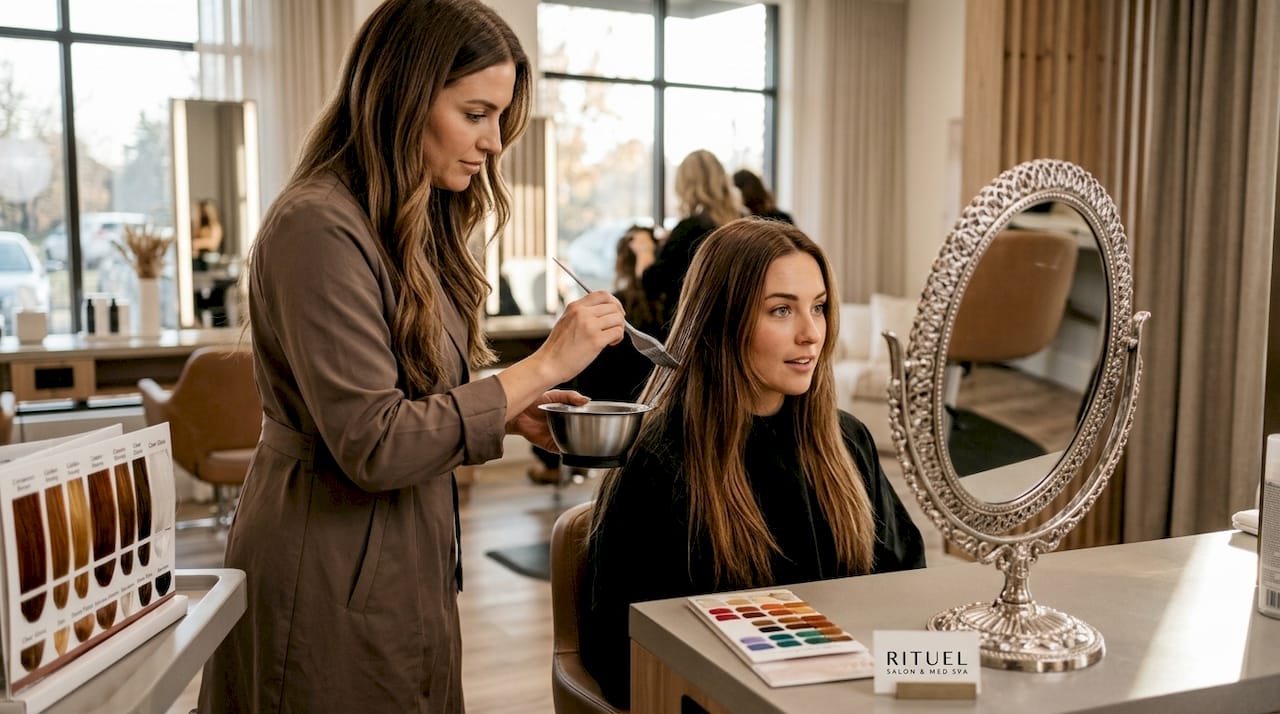
Not all glosses are created equal. The biggest distinction is whether you are visiting a salon or working with an at-home product, and whether the formula is clear or tinted.
| Type | Format | Duration | Best For |
|---|---|---|---|
| Salon demi-permanent gloss | Professional application | 4 to 6 weeks | Tone correction, color refresh, significant shine boost |
| At-home semi-permanent gloss | Self-application | 2 to 4 weeks | Mild shine boost, subtle tone maintenance |
| Clear gloss (salon or home) | Either | Varies | Pure shine with no color change |
| Tinted gloss (salon or home) | Either | Varies | Brassiness correction, color enhancement |
Salon glosses use demi-permanent formulas that penetrate the hair slightly beyond the surface layer, which is why they last longer and produce more consistent results. At-home glosses are mostly semi-permanent, meaning they coat the hair surface rather than entering the cuticle. They fade faster, typically within two to four weeks, and the color shift is subtler.
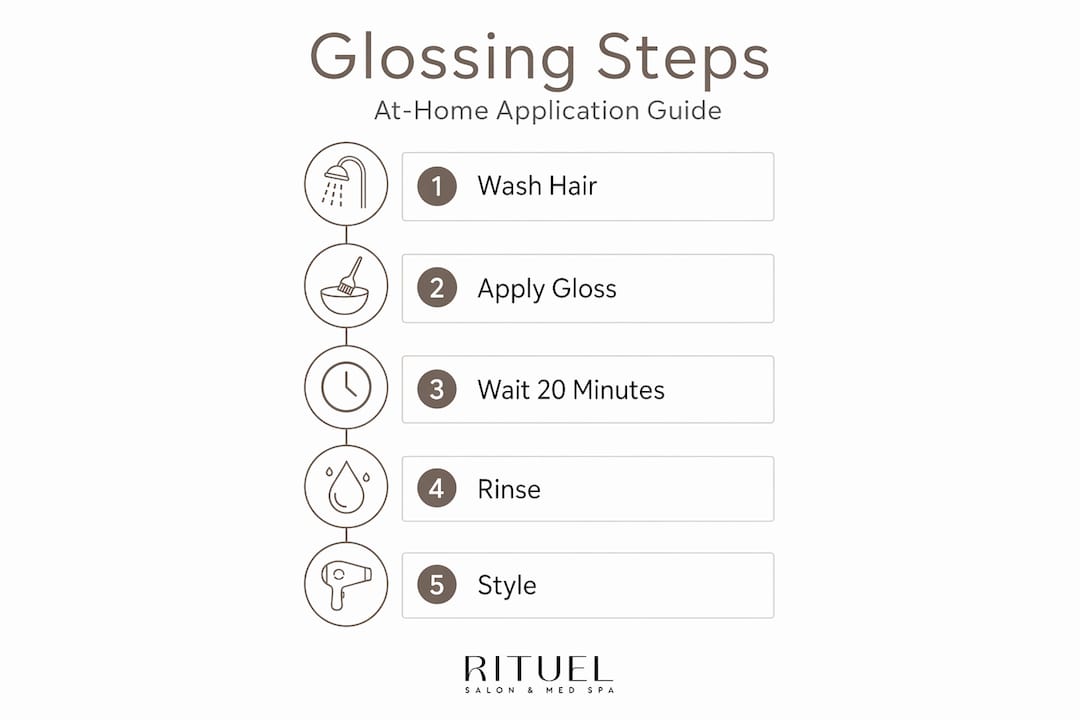
At-home gloss application typically takes about 20 minutes: wash your hair, apply the gloss to wet strands, wait the recommended time, then rinse. Brad Mondo describes this apply-and-rinse routine as genuinely beginner-friendly, making it accessible even to people who have never done any color-related treatment at home.
Salon glossing is quicker than most people expect. Professional glossing develops in 5 to 10 minutes under a stylist’s supervision, acting as a fast color refresh and shine treatment without the commitment or processing time of a full color appointment.
Pro Tip: If your goal is to neutralize brassiness, do not pick up a clear gloss. A clear formula adds shine but will not correct orange or yellow undertones. You need a tinted gloss with an ash or violet base for actual tone correction.
The main advantage of going to a salon for your gloss is customization. A skilled colorist blends the formula to match your exact base color, porosity level, and tonal goals. At home, you are working with a pre-formulated product that may land differently depending on your starting color.
Hair gloss benefits beyond shine
The shine factor is the obvious draw, but the benefits of a regular gloss routine go deeper than surface-level glimmer.
- Tone correction: Tinted glosses with ash or violet pigments neutralize warm undertones. If your highlights have gone brassy, a gloss appointment is far less damaging than re-lifting and re-toning with bleach.
- Color vibrancy: A gloss refreshes color vibrancy between full coloring appointments, extending the life of your existing color by weeks.
- Cuticle smoothing: The formula physically seals the outer layer of the strand, which reduces frizz and makes hair feel softer to the touch.
- Conditioning effect: Many gloss treatments include conditioning ingredients like amino acids that nourish and hydrate the hair while the tone is being refined. This makes gloss a genuinely good option for damaged or chemically processed hair.
- Low-commitment maintenance: A gloss appointment is quick, gentle, and does not require developer at the same strength as permanent color. It sits much closer to a conditioning treatment than a chemical service.
L’Oréal Paris frames the decision cleanly: choose gloss for shine and tone, choose dye for a full color change. That logic holds whether you are managing color-treated hair or simply trying to get more life out of your natural shade.
One point worth understanding is how gloss compares to conditioning. Hair gloss vs conditioning is not really an either/or question. A conditioner hydrates and detangles. A gloss seals the cuticle and adjusts tone. The best approach combines both: gloss for shine and tone, conditioner for moisture and manageability. Many glosses also deliver conditioning benefits, but a dedicated conditioner goes further for hydration.
For color-treated clients in Phoenix, where dry desert air accelerates fading and roughens the cuticle, a monthly or bi-monthly gloss can make a noticeable difference in how long your color holds between appointments. Think of it as part of your hair maintenance routine rather than a one-time service.
How to apply and maintain your gloss results
Getting a great result from a gloss treatment depends on both the application technique and what you do after.
At-home application steps
- Shampoo your hair and leave it damp. Most at-home glosses work best on wet hair, where the formula distributes more evenly.
- Section your hair and apply the gloss from root to tip, making sure every strand is coated.
- Set a timer. Most at-home formulas process in 15 to 20 minutes. Do not exceed the recommended time, as overtiming can shift tone unpredictably.
- Rinse thoroughly with cool water. Cool water helps seal the cuticle and lock in the shine effect.
- Follow with a lightweight conditioner, but skip heavy masks immediately after glossing. Give the treatment time to settle.
What to expect in a salon session
A salon gloss appointment is relaxed and fast. Your stylist will assess your current tone and porosity before selecting the right formula. The gloss is applied and monitored between 5 and 10 minutes to achieve the right tonal balance without overprocessing. You leave with noticeably shinier, smoother hair.
Maintenance tips
- Wait 48 hours after a gloss before washing your hair. This gives the formula time to fully set.
- Use sulfate-free shampoo. Sulfates strip color and gloss pigment faster than anything else.
- Schedule a gloss refresh every four to six weeks for salon treatments, or every two to three weeks if you are using an at-home product.
- Pair your gloss routine with a bond-strengthening treatment if your hair is chemically processed. The two work well together.
Pro Tip: If your at-home gloss results look muddy or uneven, your hair’s porosity is likely the culprit. Highly porous or damaged hair absorbs formula unevenly. A quick protein treatment beforehand can help create a more consistent canvas.
Gloss results depend heavily on your hair’s base condition, porosity, and color level. This is why professional customization consistently produces better outcomes than even the best at-home product.
My honest take on hair glossing
I’ve seen gloss treatments transform hair that looked tired, brassy, and overworked into something genuinely beautiful. And I’ve also seen people pick up an at-home gloss, apply it to porous, uneven hair, and wonder why the result looked patchy. The difference almost always comes down to one thing: knowing your starting point.
In my experience, the readers who get the most out of glossing are the ones who treat it as a regular maintenance step rather than a rescue treatment. A gloss applied to healthy, well-moisturized hair delivers a mirror-like shine. A gloss applied to dry, neglected hair delivers something more muted.
What I’ve found in practice is that tinted gloss for brassiness correction is where most people get tripped up. They choose the wrong tone, apply it to already warm hair, and end up with an unexpected result. My honest recommendation is to start with a salon gloss so you understand exactly how your hair responds before experimenting at home.
I also think the gloss category deserves more credit than it gets. It is one of the few services that genuinely delivers on both cosmetic and health goals: your hair looks better and is in better condition after the treatment. That combination is rare and worth using consistently.
— Victor
Glossy, radiant hair is waiting for you at Rituel
If you’ve been chasing that fresh-from-the-salon shine without knowing exactly how to get it, a professional gloss service is the most direct path there. At Rituel Salon & Med Spa in Phoenix, our colorists blend custom gloss formulas tailored to your specific hair color, porosity, and tonal goals. Whether you want to neutralize brassiness after highlights, refresh your balayage color between appointments, or simply restore luminosity to natural hair, we have the right formula for you.
Every gloss service at Rituel starts with a thorough consultation so your stylist understands exactly what your hair needs. You can also explore our full range of professional hair color services for more significant tone work, color correction, or highlights that pair beautifully with a regular gloss routine. Book your appointment online or call us at our Phoenix location to get started.
FAQ
What does a hair glossing treatment actually do?
A hair glossing treatment smooths the hair cuticle, adds reflective shine, and can subtly adjust your hair’s tone without permanently changing its color. It is gentler than traditional dye and works well between full color appointments.
How long does a hair gloss treatment last?
Salon demi-permanent glosses typically last four to six weeks, while at-home semi-permanent glosses fade within two to four weeks depending on wash frequency and hair porosity.
Can a hair gloss fix brassiness?
A tinted gloss with an ash or violet base can neutralize brassiness effectively. Clear glosses add shine but do not correct warm or yellow undertones, so choosing the right formula matters.
Is a hair gloss treatment safe for damaged hair?
Yes. Gloss treatments are among the gentler options for color-treated or damaged hair. Many formulas include conditioning agents like amino acids that hydrate and strengthen hair while the treatment works.
How is a gloss different from a regular hair conditioner?
A conditioner moisturizes and detangles, while a gloss seals the cuticle and refines tone. The two serve different purposes and work best when used together rather than as substitutes for each other.